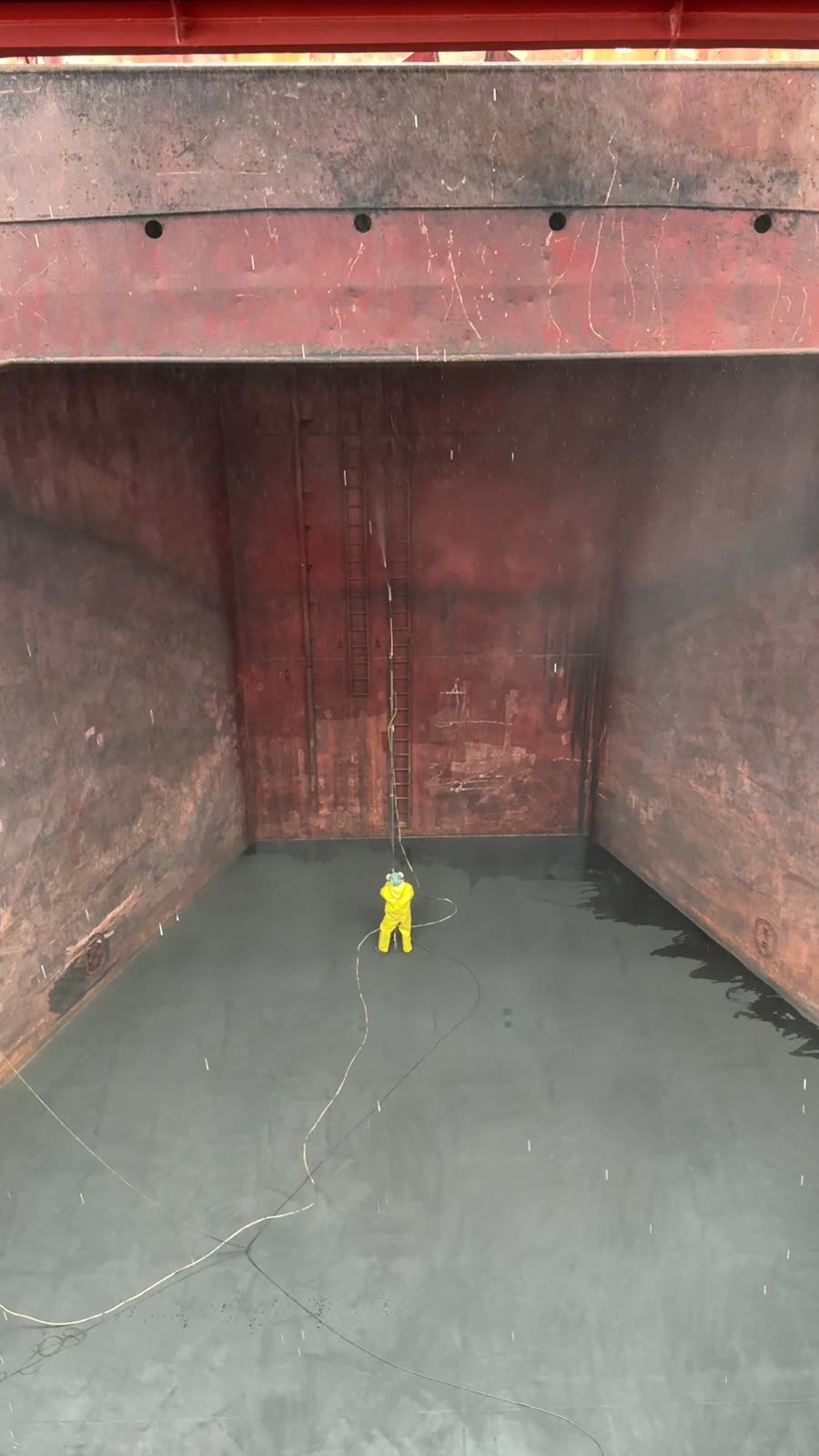
Riding team hold cleaning
The team joins at a convenient port and cleans all holds on passage. The vessel arrives at the load port ready, with no cleaning time alongside.
Riding teams for bulk carriers. We board your vessel, clean the holds during the ballast voyage and hand them over ready for inspection, up to grain-clean standard.
A ballast voyage is days of sailing with nothing in the holds. We use those days, so the vessel loses no time alongside.
3–6 men join at a convenient port and start work on passage.
Cargo residue swept, collected and lifted out before any water goes in.
Cleaning chemical applied to bulkheads, frames and hoppers and left to work on the stains.
Every surface washed down top to bottom with high-pressure machines, then rinsed with fresh water.
Upper frames, ladders and underdeck areas reached with safety harness and fall protection.
Bilge wells cleaned and tested, holds dried, the result checked hold by hold with the Chief Officer.
Clean, dry holds at the load port. The team is led by a foreman with 10 years in hold cleaning and more than 80 vessels behind him.
More than 80 vessels cleaned under our foreman in 10 years, from Handysize to Capesize.
Photos from our jobs. Drag the handle across each picture.
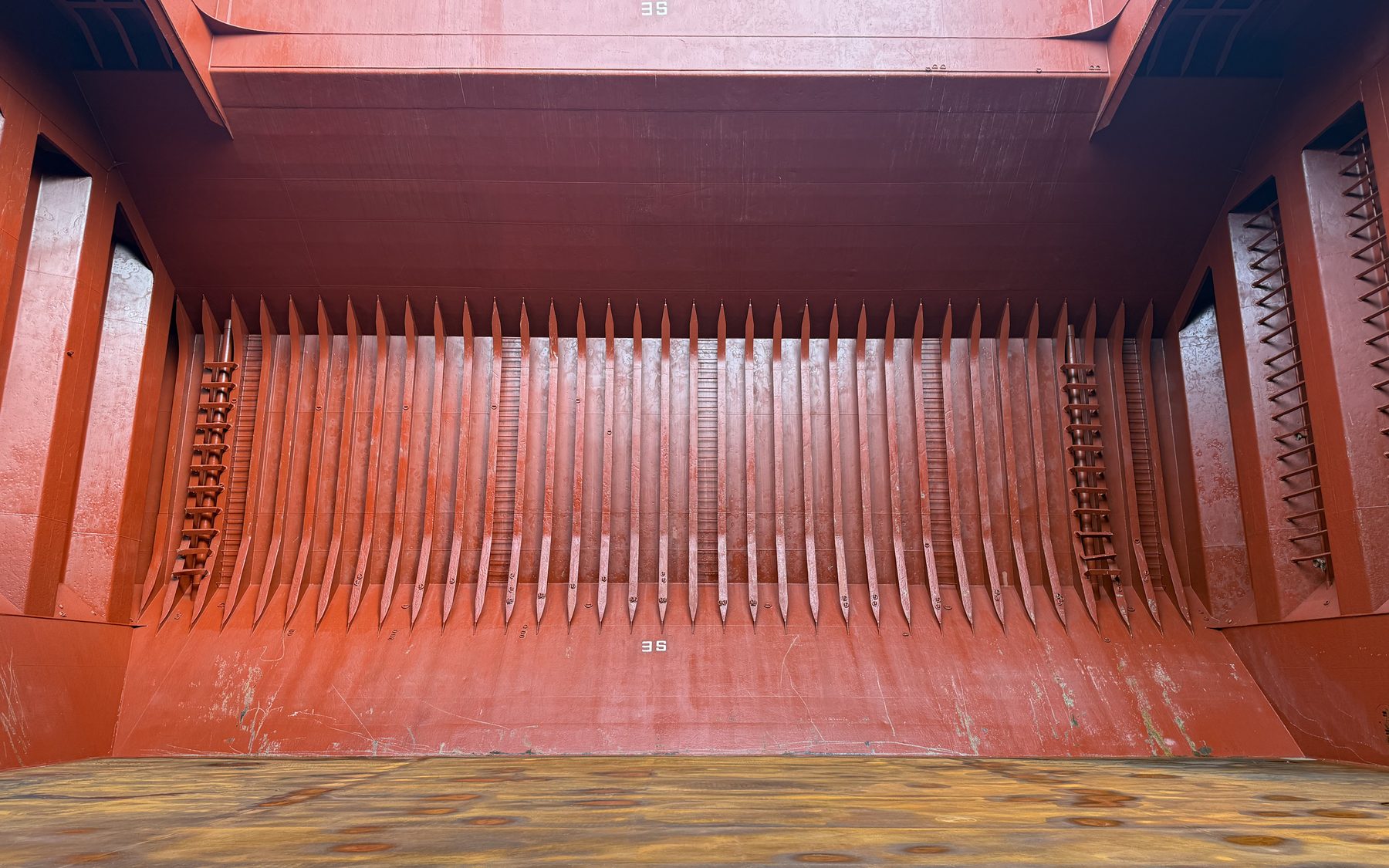
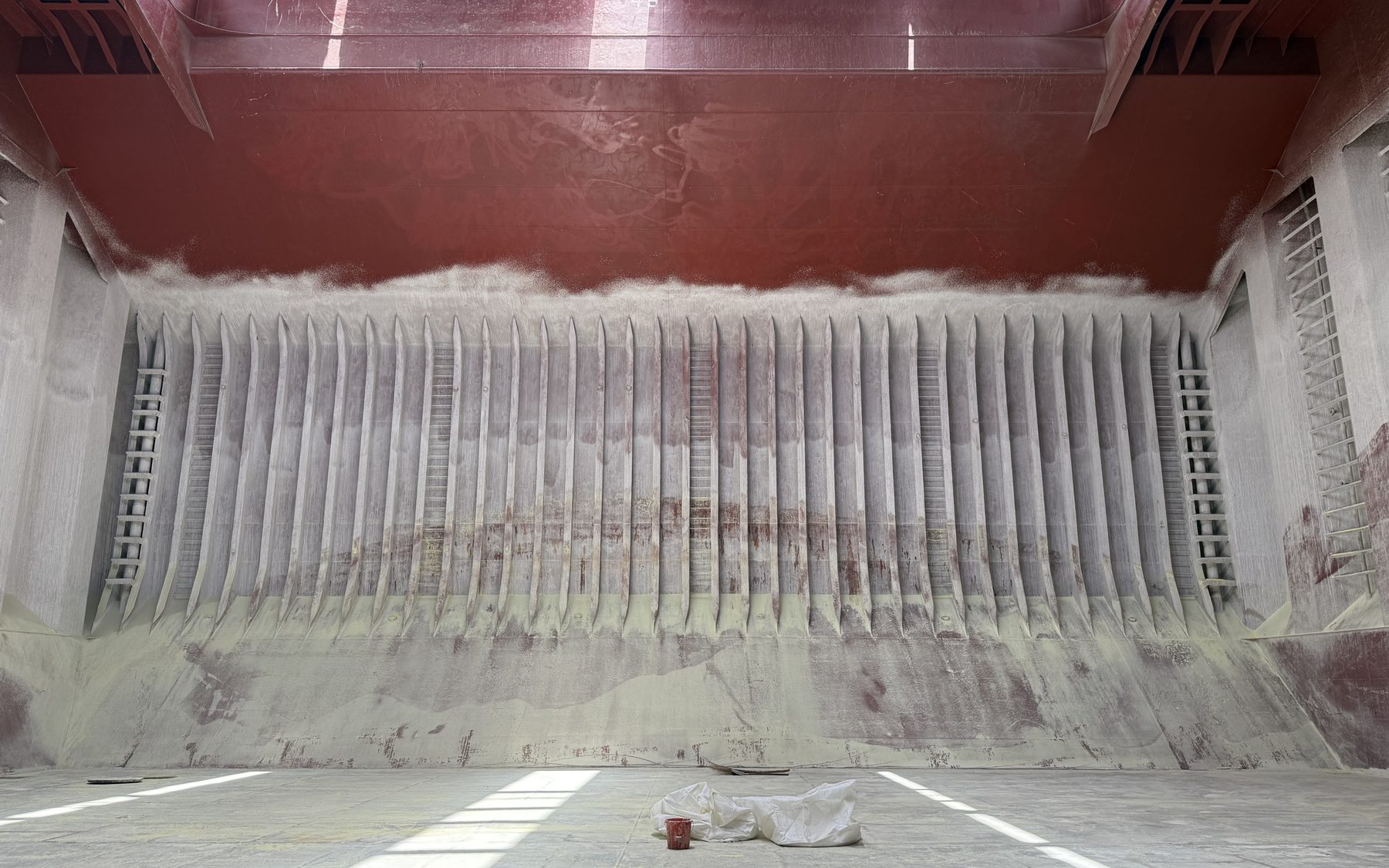 BeforeAfter
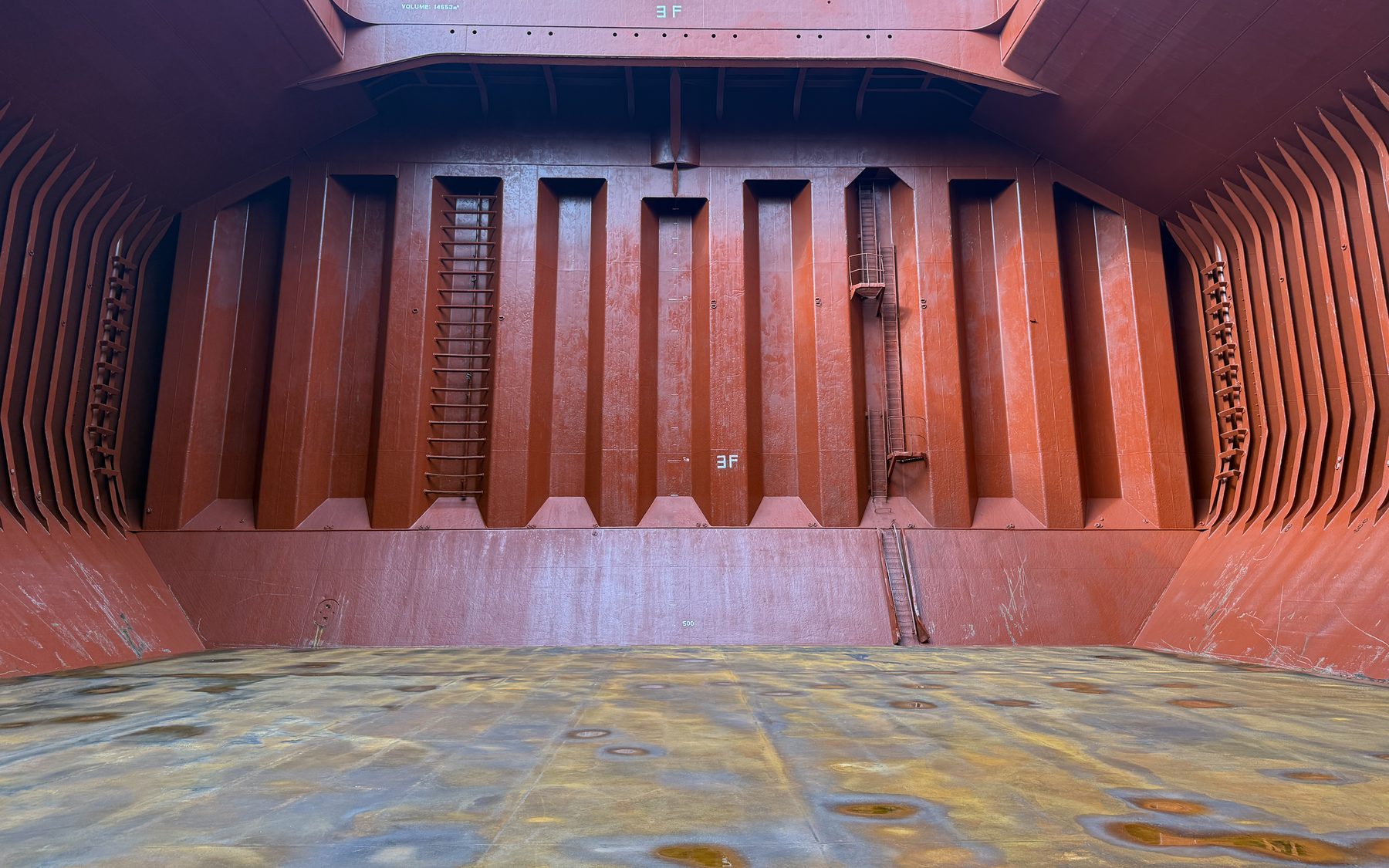
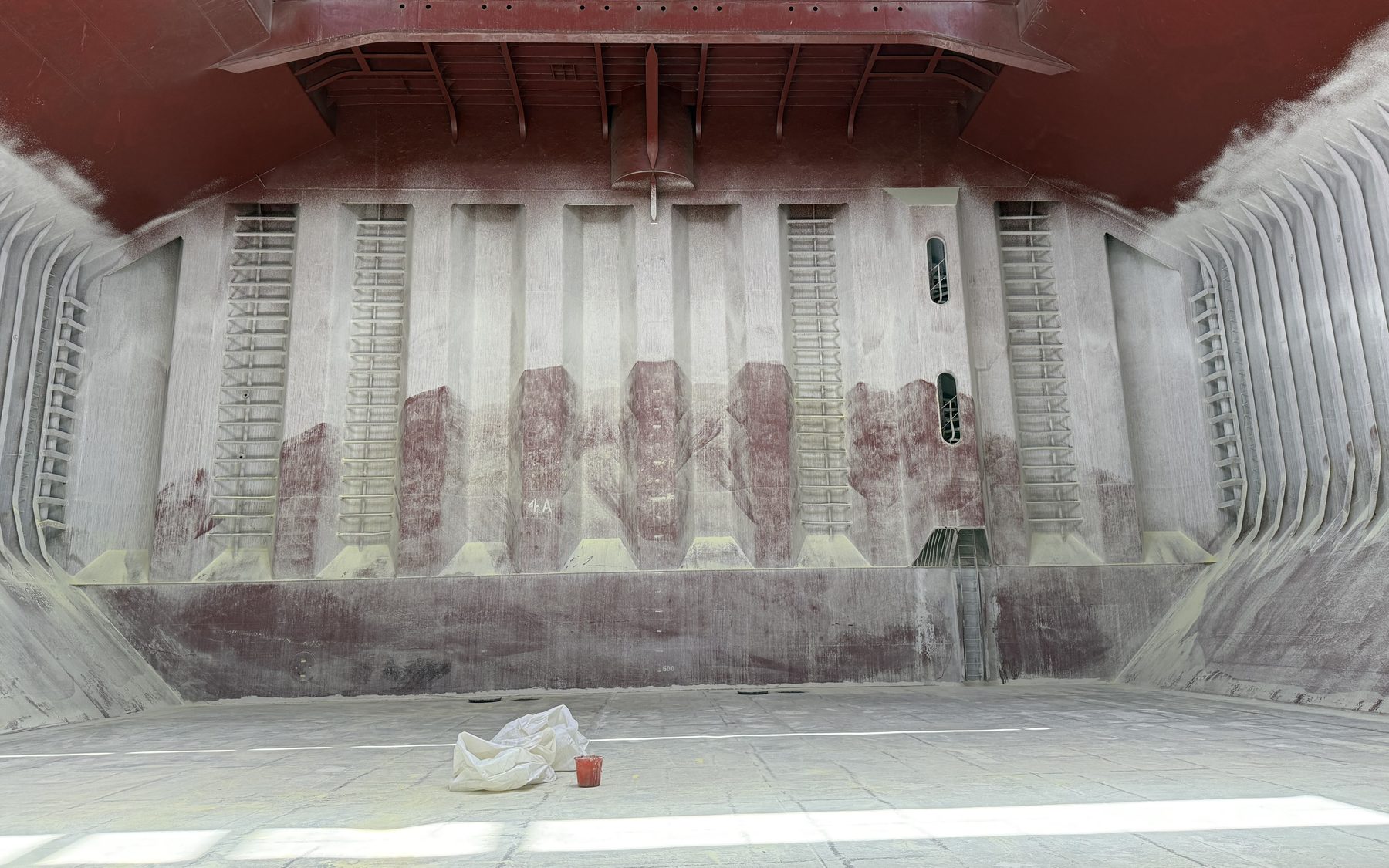 BeforeAfter
From your first message to the hold inspection.
Name, last cargo, next cargo, route and dates. Five lines are enough.
A quotation for your vessel with a plan: team size, joining port, days needed.
3–6 men board at the agreed port with all their documents in order.
The foreman reports progress to the Master and Chief Officer every day.
Each hold is checked with the Chief Officer before the surveyor comes on board.
Five jobs, one team.
The team joins at a convenient port and cleans all holds on passage. The vessel arrives at the load port ready, with no cleaning time alongside.
When there is no ballast leg to use, the team works while the vessel waits for berth or between discharge and loading.
From a dirty cargo such as coal or petcoke to grain or fertiliser: chemical wash, high-pressure rinse, loose scale removed, holds dried.
Mud and scale removed from ballast tanks, surfaces prepared and coated by the same team while the vessel trades.
Surface preparation and painting of cargo holds and tanks on bulk carriers when the owner or the next cargo requires it.
Hold inspections fail on the places that are hard to reach. Those are the places we spend the time on.
Unedited clips from our jobs. Scroll sideways.
Holds are cleaned on days the vessel is sailing anyway, so she is not kept alongside or at anchor for cleaning.
A full hold wash after a dirty cargo is heavy work for a ship's crew on top of watches and maintenance.
A team that does only this work cleans to the standard the next cargo needs.
The team works under its own foreman, who reports to the Master and Chief Officer daily.
Team foreman. 10 years in hold cleaning, more than 80 vessels cleaned under his lead.
Every man on the team holds a seaman's book, STCW basic safety certificates and a valid seafarer medical.
Any port on your route. We book the flights and bring the team to the vessel.
These are the ports teams join at most often. If your vessel calls somewhere else, we go there.
Bulk carriers from Handysize to Capesize, geared and gearless.
3 to 6 men, sized to the number of holds and the days available on passage.
Five lines: vessel, last cargo, next cargo, route with possible joining ports, and dates.
The team works under its own foreman, who answers to the Master and reports daily.
Your message opens in WhatsApp or your mail app, ready to send.